
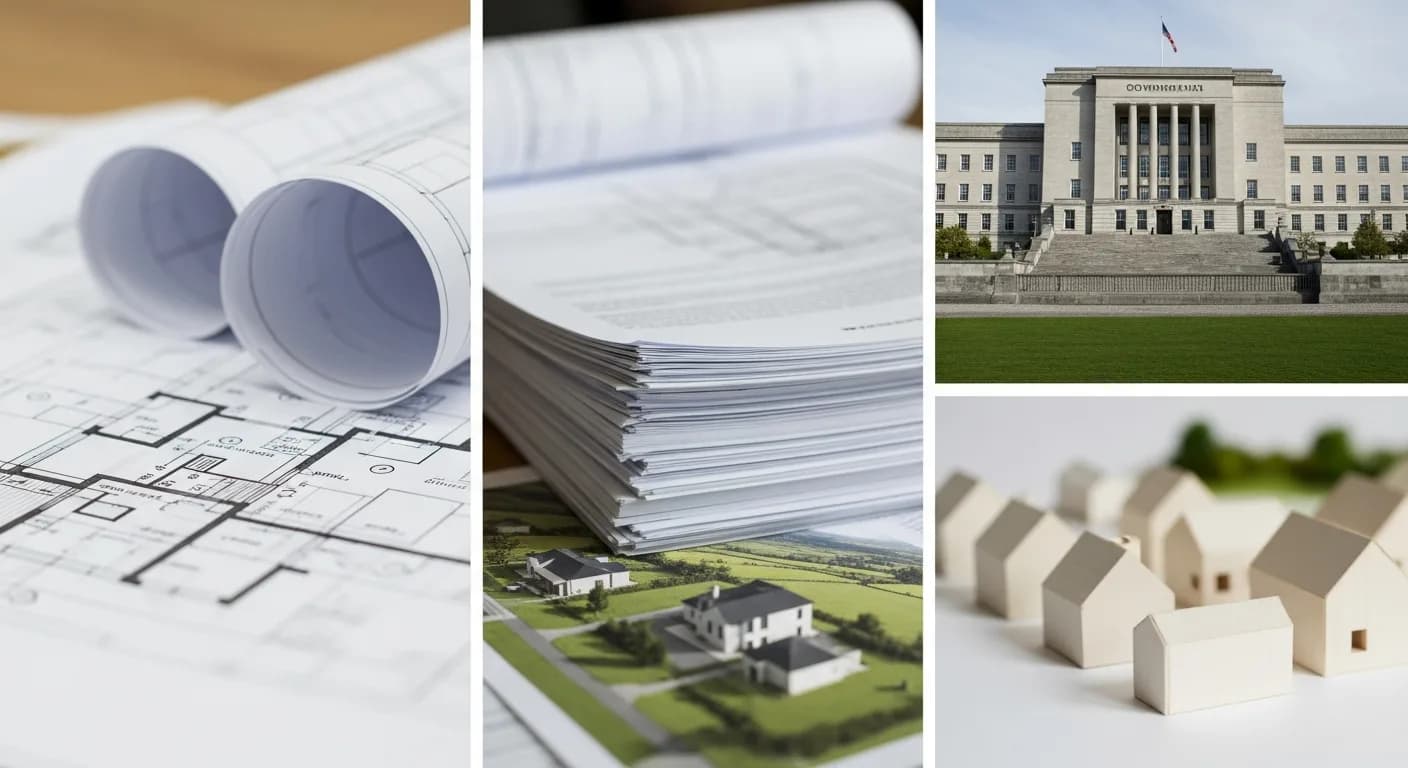
Government approves draft policy to ease planning rules for rural one-off housing
Saturday 4 July 2026
The Irish government has approved a new draft planning statement aimed at streamlining rules and easing restrictions for one-off rural homes.
The Irish cabinet has approved the Draft Sustainable Rural and Gaeltacht Housing National Planning Statement, introducing a new policy framework to ease planning regulations for one-off homes in rural areas.
According to Planning Minister James Browne, the new policy is designed to end what has been described as an "Eircode lottery" where local authorities apply differing, arbitrary restrictions on rural housing applications.
Key Changes to Rural Planning Rules
Under the newly approved draft policy, several long-standing restrictions applied by local councils will be removed. The major changes include:
- **Removal of farm dwelling caps:** Local authorities will no longer be permitted to cap the number of homes built on a single farm.
- **Standardised site requirements:** Minimum road frontage and minimum site size requirements for rural houses have been scrapped.
- **Ribbon development:** Existing restrictions on ribbon development have been relaxed.
Qualifying Criteria
To qualify for planning permission under the new system, applicants must still demonstrate a social or economic need for the dwelling. To satisfy the social need criteria, an applicant must have lived within a 10-kilometre radius of the proposed site for a minimum of seven years, which can be consecutive or cumulative.
Additionally, any approved dwelling must serve as the applicant's primary residence, and the applicant must intend to live there for at least 10 years.
Smaller Settlements and Health-Related Exceptions
The draft statement also introduces specific provisions for smaller communities and those with exceptional health needs:
- **Settlements under 1,500 people:** Rural settlements with populations below 1,500 are now automatically considered to have a housing need, meaning planning applications in these areas should not be refused outright on housing-need grounds.
- **Health-related dwellings:** Individuals with exceptional health needs will be permitted to build a second, accessible residence of up to 90 square metres adjacent to their primary home.