
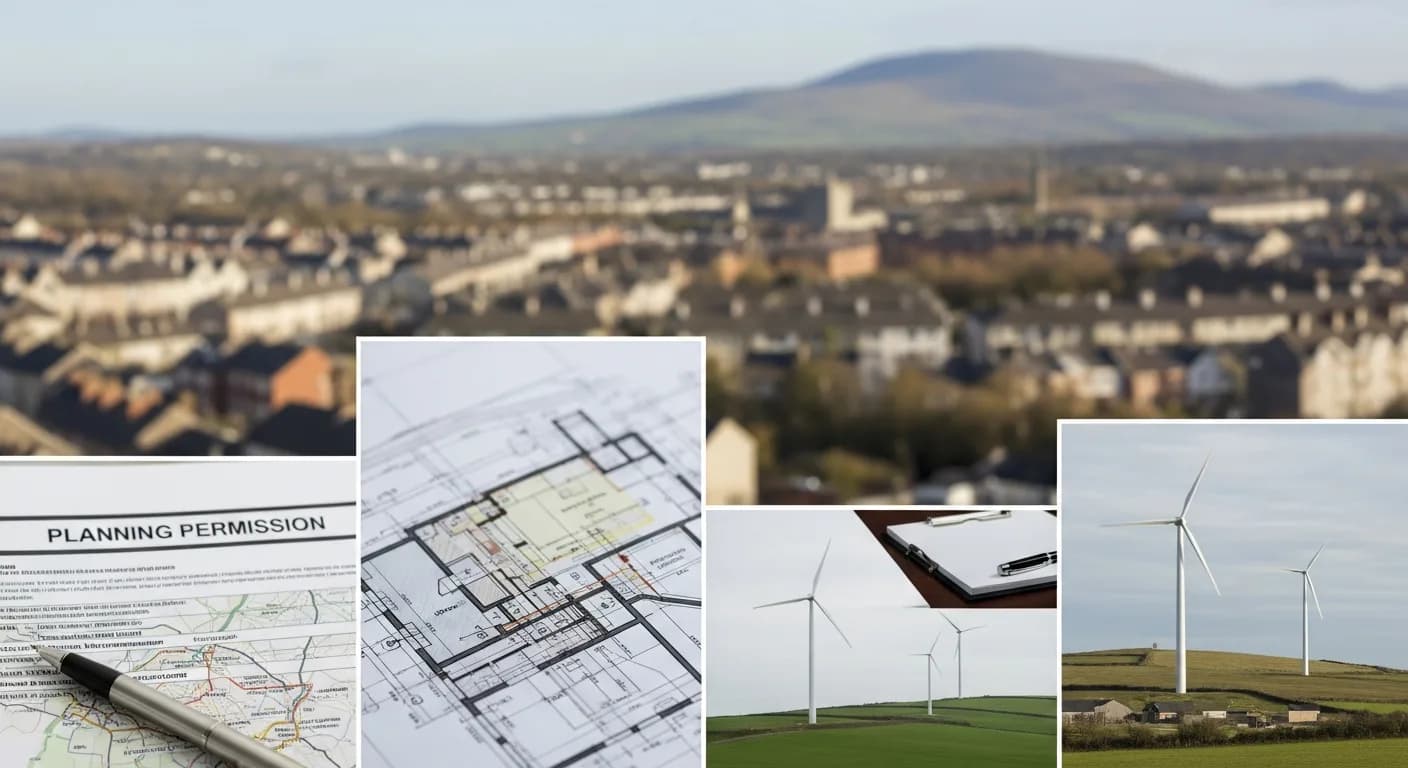
Government preparing new wind energy national planning statement to replace 2006 guidelines
Thursday 16 July 2026
New guidance on onshore wind energy will be issued as a national planning statement following a joint department review of the existing 2006 guidelines.
Ireland's upcoming guidance on onshore wind energy developments will be issued as a national planning statement rather than traditional ministerial guidelines, according to Minister of State Kieran O'Donnell.
Speaking in the Dáil, Deputy O'Donnell confirmed that existing planning guidelines for wind energy, which date back to 2006, remain in force but will eventually be replaced. Under the Planning and Development Act 2024, national planning statements are being introduced to replace ministerial guidelines previously issued under section 28 of the Planning and Development Act 2000.
Transition to National Planning Statements
All current section 28 guidelines will remain active until they are formally revoked or replaced by a corresponding national planning statement. Deputy O'Donnell stated that progress has been made towards concluding the review of the wind guidelines to ensure the new framework is fit for purpose.
The Department of Housing, Local Government and Heritage is collaborating with the Department of Climate, Energy and the Environment to identify key factors for the forthcoming statement. The new policy document is expected to address critical issues including:
- Noise levels
- Setback distances
- Shadow flicker
- Community obligations and community dividends
- Grid connections
Concerns Over Mayo Wind Projects
The legislative update followed statements from Deputy Rose Conway-Walsh, who raised concerns regarding the ongoing use of 20-year-old guidelines for onshore wind developments. Deputy Conway-Walsh highlighted several proposed wind projects in County Mayo, including the Tirawley wind farm at Lacken along the Céide coast, as well as proposals in Geesala, Mount Jubilee, Srah, Rinmore, and Mayo Abbey.
She argued that the lack of updated national guidelines has created planning challenges for local communities, particularly regarding visual impacts on the Wild Atlantic Way, peatland drainage in blanket bog habitats, and cultural heritage preservation.