
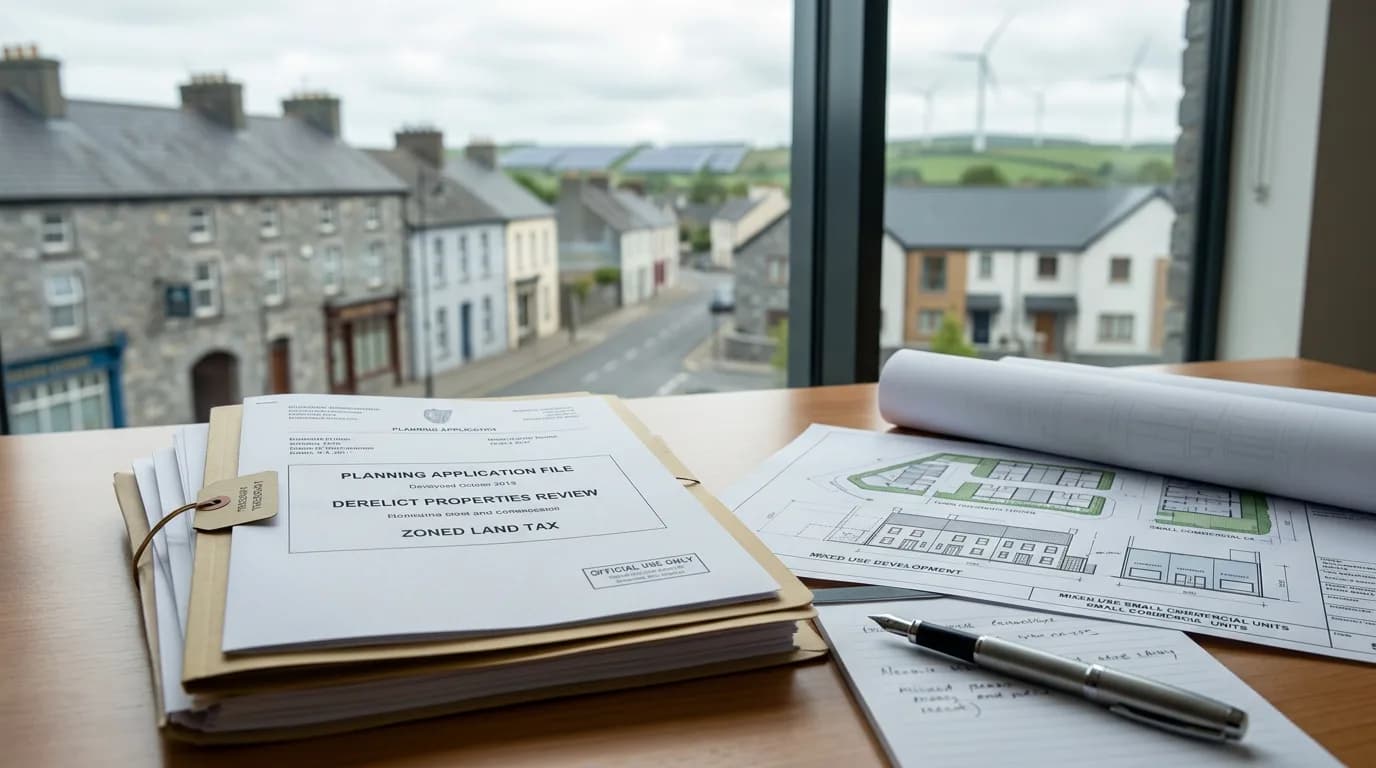
Finance Bill 2026 introduces derelict property tax and Residential Zoned Land Tax revisions
Wednesday 21 October 2026
The Government has introduced the Finance (No. 2) Bill 2026, setting out legislative provisions for a new derelict property tax and adjustments to the Residential Zoned Land Tax.
The Government has introduced the Finance (No. 2) Bill 2026, detailing legislative measures for a new derelict property tax and changes to the Residential Zoned Land Tax.
Speaking during the Second Stage debate in the Dáil, Minister of State at the Department of Finance Robert Troy outlined the housing and property-related measures contained in the 79-section, 238-page Bill, which legislates for taxation decisions announced in Budget 2027.
Derelict property tax and RZLT changes
A central measure highlighted during the debate is the creation of a new derelict property tax intended to bring vacant and disused buildings back into residential use. Under the proposal, local authorities will supply local expertise while the Revenue Commissioners will administer and enforce collection.
The Bill also introduces amendments to the Residential Zoned Land Tax (RZLT). According to the Minister of State, these changes are intended to improve the operational mechanics of the tax and accelerate the release of serviced zoned land for housing development.
Auxiliary dwellings and housing supports
In addition to land taxes, the Bill contains provisions directly affecting residential accommodation and purchasing supports:
- **Rent-a-room relief:** The existing scheme is extended to include qualifying auxiliary dwellings, providing homeowners with additional options to utilise residential space.
- **Help-to-Buy scheme:** The legislation enhances the scheme by raising the maximum relief threshold accessible to qualifying purchasers.
- **Rent tax credit:** Section 4 increases the credit for 2027 and 2028 by €150, taking it to €1,150 for individual claimants and €2,300 for jointly assessed couples.
The debate on the Second Stage of the Bill remains before the Dáil.